
Wake County Record Evidence
There is no single official list of current Wake County residents. Wake County keeps the relevant facts in separate custodian systems. A focused name search instead matches a narrow question to the office that keeps that record. The property system reports ownership and parcel fields, the election system reports registration information, and court results report a case role. Treat each result as a dated record, rather than as a complete description of a person.
| Record | What It Confirms | Where | Access |
|---|---|---|---|
| Property tax record | Owner of record, parcel, and mailing field | Wake Real Estate Search | Free public search |
| Voter registration | Name, status, precinct, and jurisdictions | NC Voter Search | Public fields only |
| Court case index | Named party and case activity | NC eCourts Portal | Public search; clerk copies separately |
| Vital event record | An event, date, place, or relationship | NC Vital Records | Eligibility varies for copies |
| Entity or credential record | A filing or regulatory role | NC Business Search | Public search where offered |
If an address is known, begin with the parcel and retain its REID or PIN. If only a name is known, use a middle name, date, parcel, or case role to separate namesakes. Assessed value, tax fields, and property descriptions describe the property and its owner record. They do not establish who occupies it.
Wake County Records Evidence Ladder
Use the smallest trail that answers the question. This approach prevents one matching name from turning into a broad profile. A Wake County search log should retain the search date, portal, displayed role, and any identifier that another custodian can check.
- State the fact and date being tested, such as a parcel owner, registered voter, historical listing, or court party.
- Anchor the name to a Wake address, REID, PIN, middle initial, or dated document.
- Check a second official system for the same limited fact, not for unrelated personal details.
- Read the role and record date before interpreting a result.
- Request an official copy from the custodian when the underlying document is needed.
For historical work, a dated directory or deed can be the second source. A current property result should only serve as a modern parcel crosswalk, not as proof of uninterrupted residence.
Wake County Court Search Fields
The public NC eCourts Portal supports a controlled name search. In Basic Search, choose Wake or all locations, then narrow the result by hearing type and search type. A party search accepts last, first, middle, and suffix fields, and a wildcard can help with an uncertain spelling.
| Portal field | Wake search choices |
|---|---|
| Location | Wake, all locations, or another listed location |
| Hearing Type | All, Civil, Criminal, Family, Probate, or Mental Health |
| Search Type | Case Number, Party Name, Business Name, Attorney Name, Attorney Bar Number, Judicial Officer, or Courtroom |
| Advanced filters | Date or hearing, case type or status, and public fields where displayed |
The court-record access guidance is a useful reminder that the portal and the Clerk serve different functions.
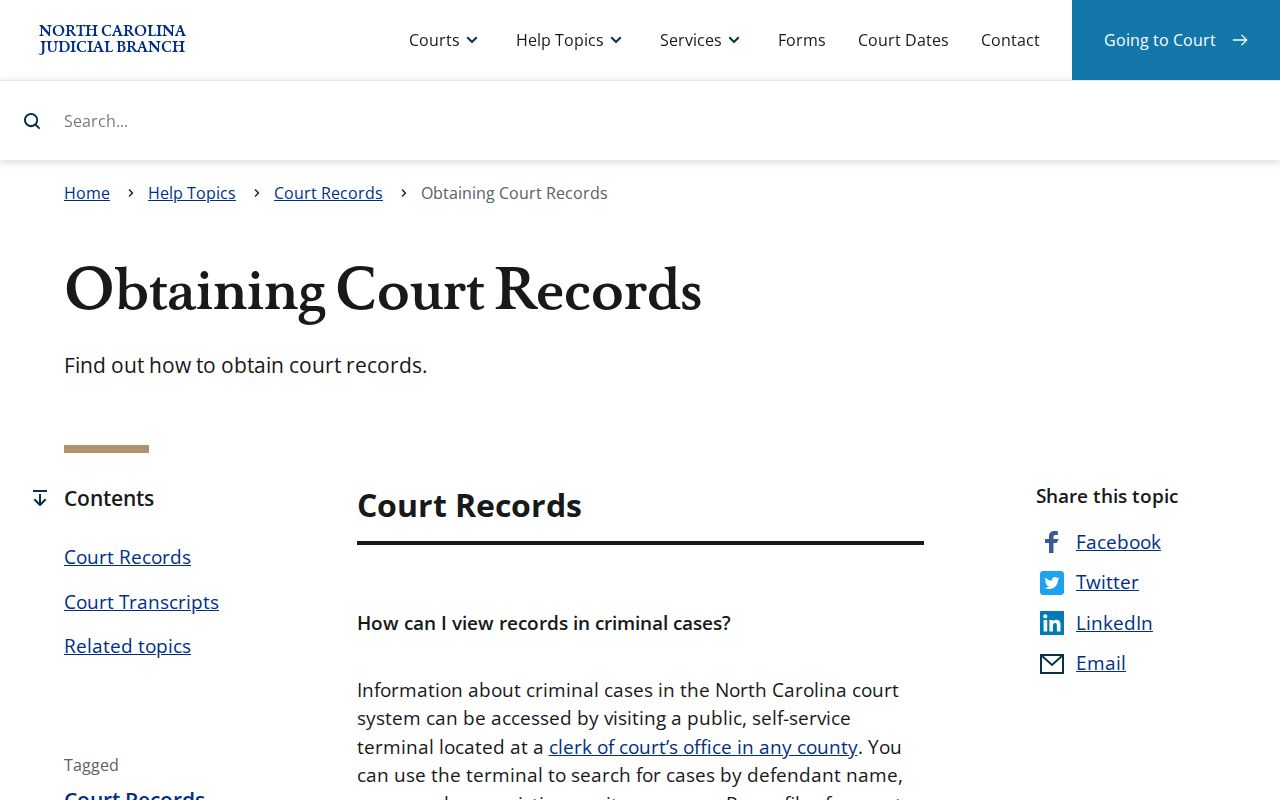
Selecting Wake and an appropriate case category makes common-name results easier to review. A missing online result is not proof that no court file exists.
Wake County Court Result Review
eCourts can display a case number, filing date, case type and status, party names, case summary, docket events, hearings, judgments or orders, warrants, and available images. The exact display varies. The portal excludes or limits sealed, expunged, victim, and confidential information, and the Judicial Branch says public portal data is not the official court record.
- Case number and Wake or other location
- Filing date, type, status, and party role
- Register of Action entries and hearing events
- Orders, judgments, warrants, or images when publicly available
A party name is not a finding of liability or guilt. The docket must be read in context, and an official or certified record comes from the Wake County Clerk of Superior Court.
Wake County Voter Record Scope
NC Voter Search requires first and last name plus at least one voter-status choice. Middle initial, year of birth, and Wake County can narrow a search. Public results may include name, status, precinct, polling place, jurisdictions, sample-ballot information, absentee information, and voter history.
Under N.C.G.S. 163-82.10, public registration fields also include age rather than full birth date, political affiliation, registration date, and district information. Full or partial Social Security numbers, date of birth, email, driver-license information, photo-ID copies, and similar protected fields are excluded. Registration status is time-sensitive and does not prove present physical residence or identify a same-named person by itself.
Wake County Vital Record Channels
Birth, death, marriage, and divorce records have different custodians. NC Vital Records ordering guidance lists state availability years, while Wake County handles qualifying Wake birth, death, and marriage requests through its Register of Deeds. Divorce copies come from the Clerk of Superior Court in the county where the case was filed.
N.C.G.S. 130A-93 limits certified-copy access by relationship, authorization, or another stated legal basis. The Wake County Register of Deeds offers online, counter, and mail channels for Wake events, and its paper form requires event details, relationship information, identification, and payment. State orders, archives, and library research routes can be more appropriate for older material. An event record does not establish a current address.
The state vital-record ordering page shows the separate state channel and its eligibility prompts.
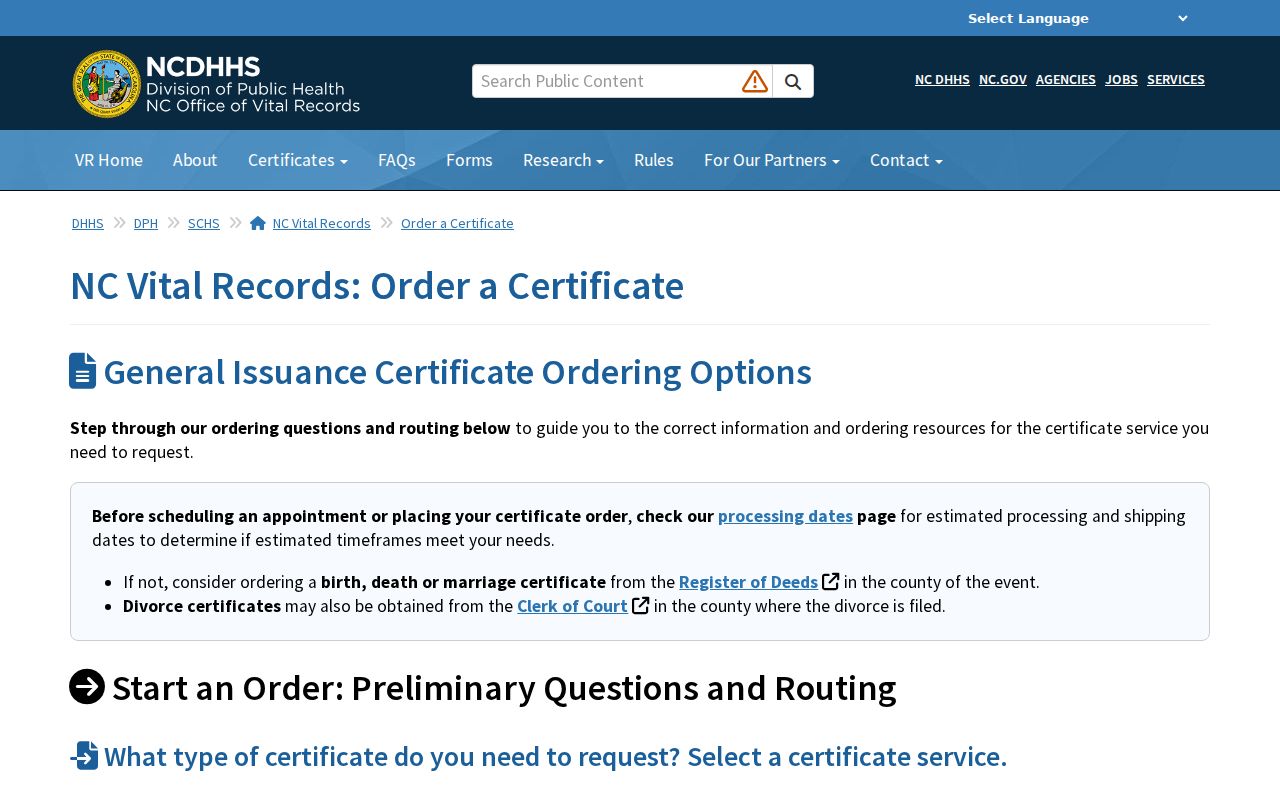
Check the live county or state form before paying because eligibility, fees, and processing details can change.
Wake County Public Record Roles
A name may appear in a Secretary of State business profile or a North Carolina professional-board result. These sources can confirm a filing or credential field, such as an entity officer, registered agent, manager, or licensee. They do not show who lives at an address. Keep the entity or credential role separate from a residential conclusion.
When the question concerns a public professional credential, use the relevant state board rather than assuming one statewide people directory exists. Preserve the board, result date, and license status shown by that board.
Wake County Safety Record Limits
Safety-related databases have narrow purposes and should be read with extra care. The official Wake arrest access notice describes arrests from April 27, 2007 forward insofar as the Bureau knows, not a complete jail roster or a disposition database.
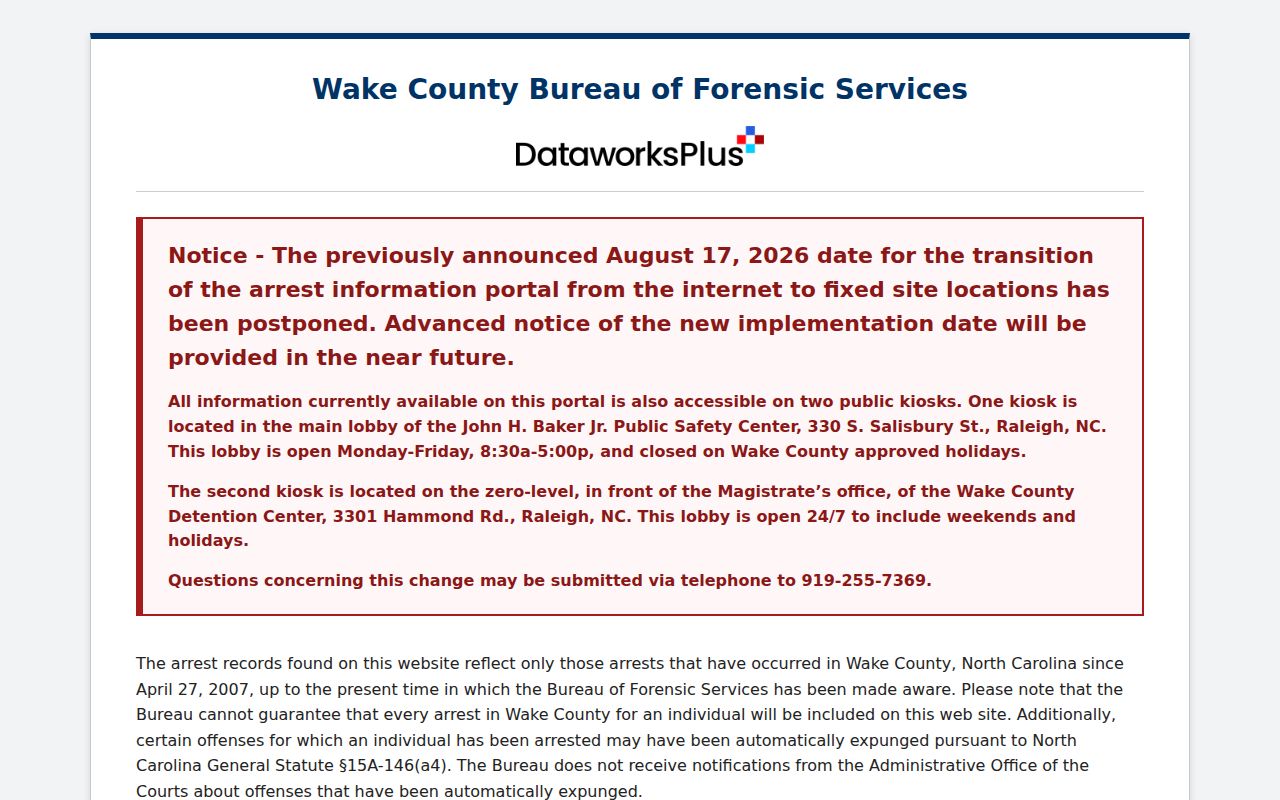
The notice also records a postponed move to fixed kiosks, so availability should be checked at the time of a legitimate search.
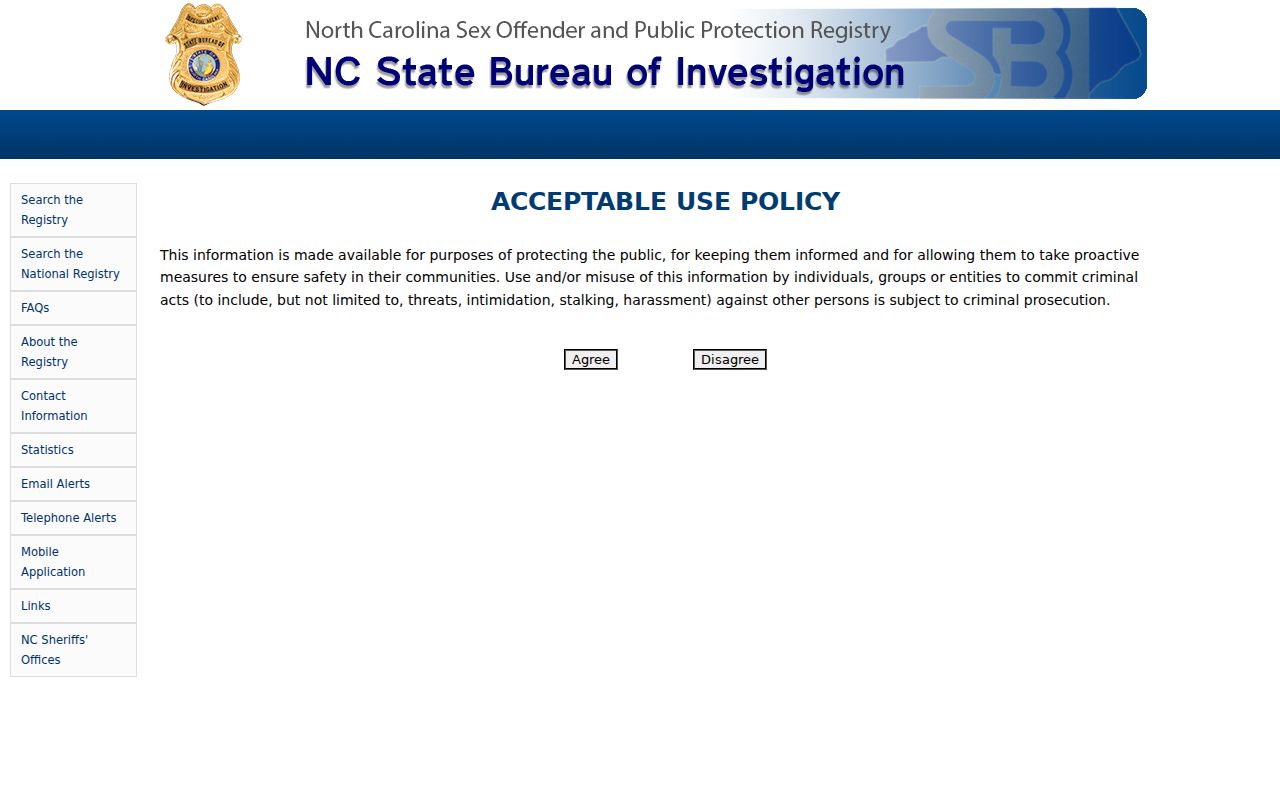
The NC SBI Sex Offender Registry offers name, city, ZIP, nearby-address, coordinate, and registry-number searches. It warns that data can change, may be incomplete, and needs independent identity verification.
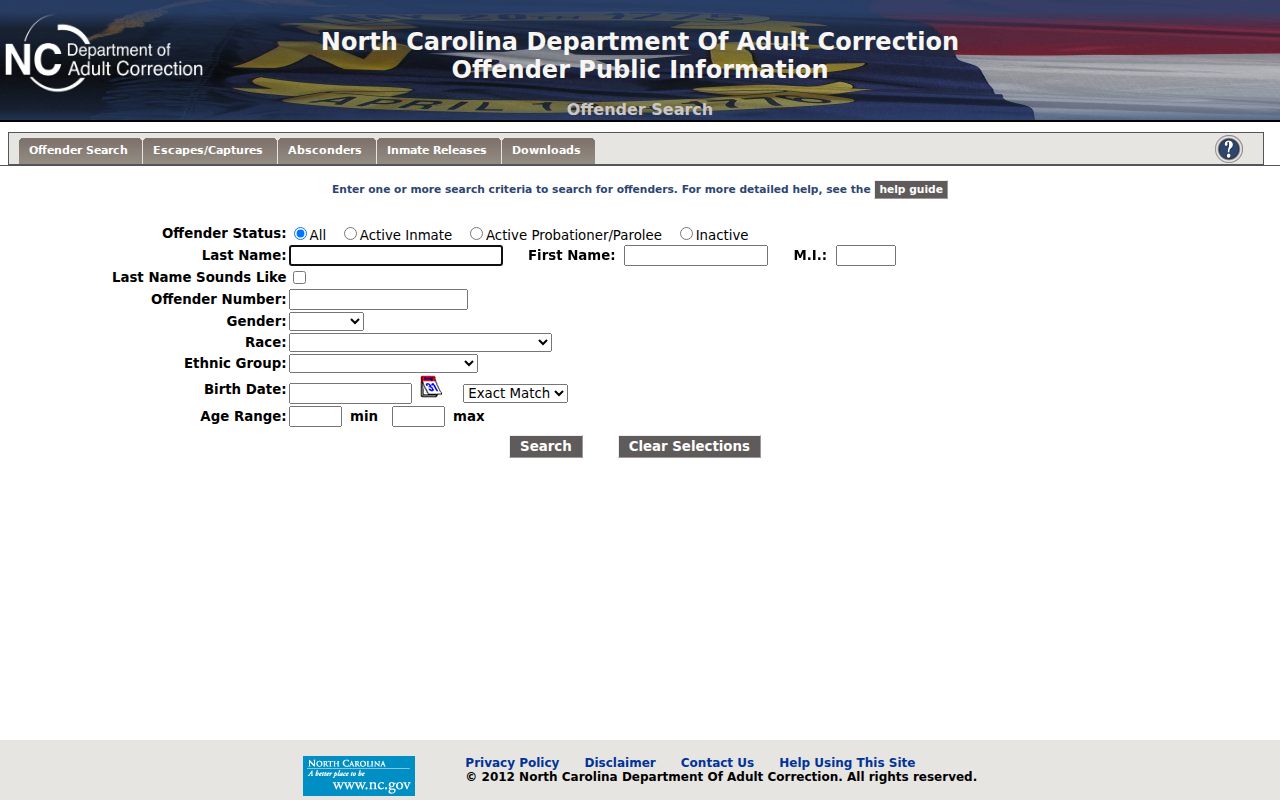
For state prison, probation, or parole information, the NC Department of Adult Correction Offender Search reaches historical information back to 1972 but excludes county-jail-only custody.
Neither a matching name nor an arrest or registry result should be used to make an accusation about a person.
Wake County Search Log
A short log keeps a Wake County resident lookup from turning into an unsupported story about a name. Record the question, search date, exact terms, portal, custodian, filters, result count, identifier, visible fields, record role, and access URL. If a search returns nothing, write “no result in this search” and note the spelling variants, date range, and location filter used. That is more accurate than saying no record exists.
For a common name, add the independent detail that actually narrowed the result, such as a middle initial, parcel REID, recorded document date, case number, or directory edition. A second source should test the same narrow fact, not inflate it into a broader profile. This record-by-record approach also makes it easier to correct a mistaken match or explain why a source was excluded.
Wake County Record Search Terms
Use the record’s own language when saving a result. These short definitions keep a name search tied to what the custodian actually reported.
- Docket
- A court’s running list of events and filings in a case.
- Index and image
- An index helps locate a record; an image is the scanned document when the custodian makes it available.
- Certified copy
- A copy authenticated by the custodian for uses that require certification.
- REID and PIN
- Wake property identifiers that help distinguish a parcel from an address label.
Wake County Records Requests
The North Carolina Public Records Act, Chapter 132 supports inspection of existing public records subject to exceptions and redactions. It does not require an office to create a new list or compile an all-resident database. A focused request should name the existing index, case, parcel, document, date range, and preferred copy format.
For a court file, give the eCourts case number, division, document name or date, and whether certification is needed. For a recorded instrument, give a document identifier or book and page. Wake County counters, mail forms, phone assistance, archives, and library collections remain useful when an online result is incomplete.
Wake County Record Privacy Limits
Some information stays confidential even when another field is public. The NC Address Confidentiality Program provides eligible survivors a substitute address; never try to identify a participant’s actual location. Courts also protect sealed, expunged, juvenile, victim, and confidential material. Correction requests belong with the agency that owns the record.
Lawful use. Use Wake County records for lawful personal research, family history, civic questions, property history, or safety planning. N.C.G.S. 14-277.3A prohibits stalking, and repeated unwanted contact or intimidation is never a valid records purpose.