
Wake County City Directory Collections
Wake County researchers have a strong physical starting point in the Raleigh City Directory catalog at Olivia Raney Local History. The catalog credits both R. L. Polk & Company and Hill Directory Company, and it marks the volumes as reference material that does not circulate or accept holds. That detail matters. A citation to a year that is not on the shelf is not the same as a confirmed entry. The catalog also shows why an exact edition should be checked before drawing a conclusion about a person or address.
| Collection | Years | Where held | Access |
|---|---|---|---|
| Raleigh directory early run | Intermittent: 1880–81, 1887, 1891, 1896–97, 1899–1900, 1903–04 through 1925–29 | Olivia Raney Local History | Reference, noncirculating |
| Raleigh directory later run | Broad annual or near-annual coverage through the 1980s and 1990s, plus 2000–2026 | Olivia Raney Local History | Check catalog and staff availability |
| Raleigh Suburban Directory | 1969–1977 and 2021 listed | Olivia Raney Local History | Separate Polk/Hill catalog record |
| DigitalNC Raleigh scans | 1925 and 1933 direct scan leads | DigitalNC City Directories collection | Search by city, county, and year |
The early Wake County run is uneven: between 1903–04 and 1925–29, the catalog lists 1905–06, 1907–08, 1909–10, 1911–12, 1913–14, 1915–16, 1917, 1918–19, 1919–20, 1921–22, 1922–23, and 1923–24. It still contains gaps. Treat a missing year as a collection question first, then look for the nearest available volume, a Suburban edition, a scan, or a companion source.
The Raleigh City Directory catalog record is the best first check before a library visit.
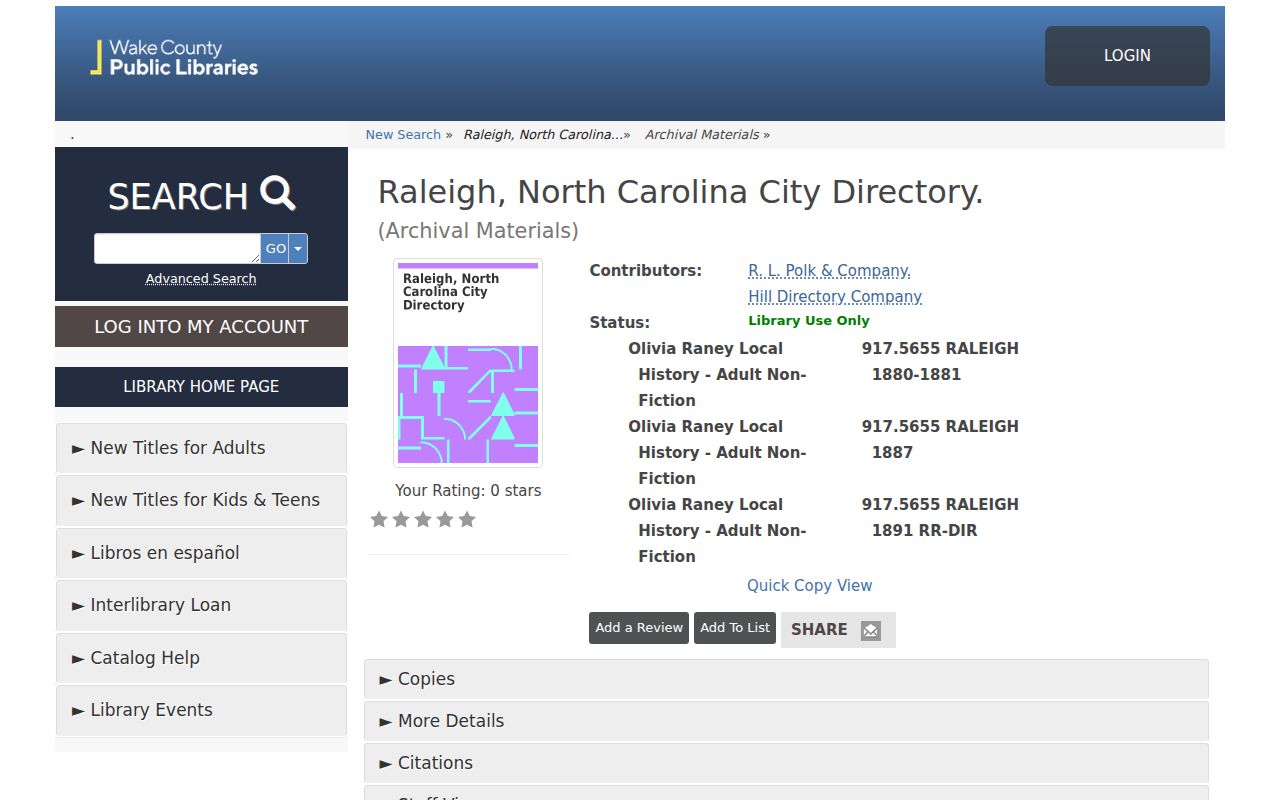
The Wake County catalog view makes the local shelf a real access route, not merely a backup to online results.
Note: Preserve the edition year and page image because a catalog listing establishes holdings, not the wording of an individual entry.
Wake County Directory Shelves at Olivia Raney
Olivia Raney Local History is listed at 4016 Carya Drive in Raleigh, with 919-250-1196 as its phone number. Wake Public Libraries says staff can help with genealogy and local-history questions, so a call or visit can confirm whether a volume and page are available before relying on a transcription. The same care helps when a Wake County address lies outside the old downtown footprint. The separate Suburban Directory record can supply a better edition lead for an address beyond the city core, but its coverage remains edition-specific.
Wake County historical work also benefits from local organizations that point to complementary material. The society resource page includes surname research, cemetery leads, publications, and projects, including a publication lead for Wake bastardy bonds from 1772–1937. Its inspected holdings pages did not provide a complete item-level inventory, so a precise item should be confirmed with the organization rather than assumed from a topic heading.
The Wake County Genealogical Society resource page is a useful route for those companion leads.
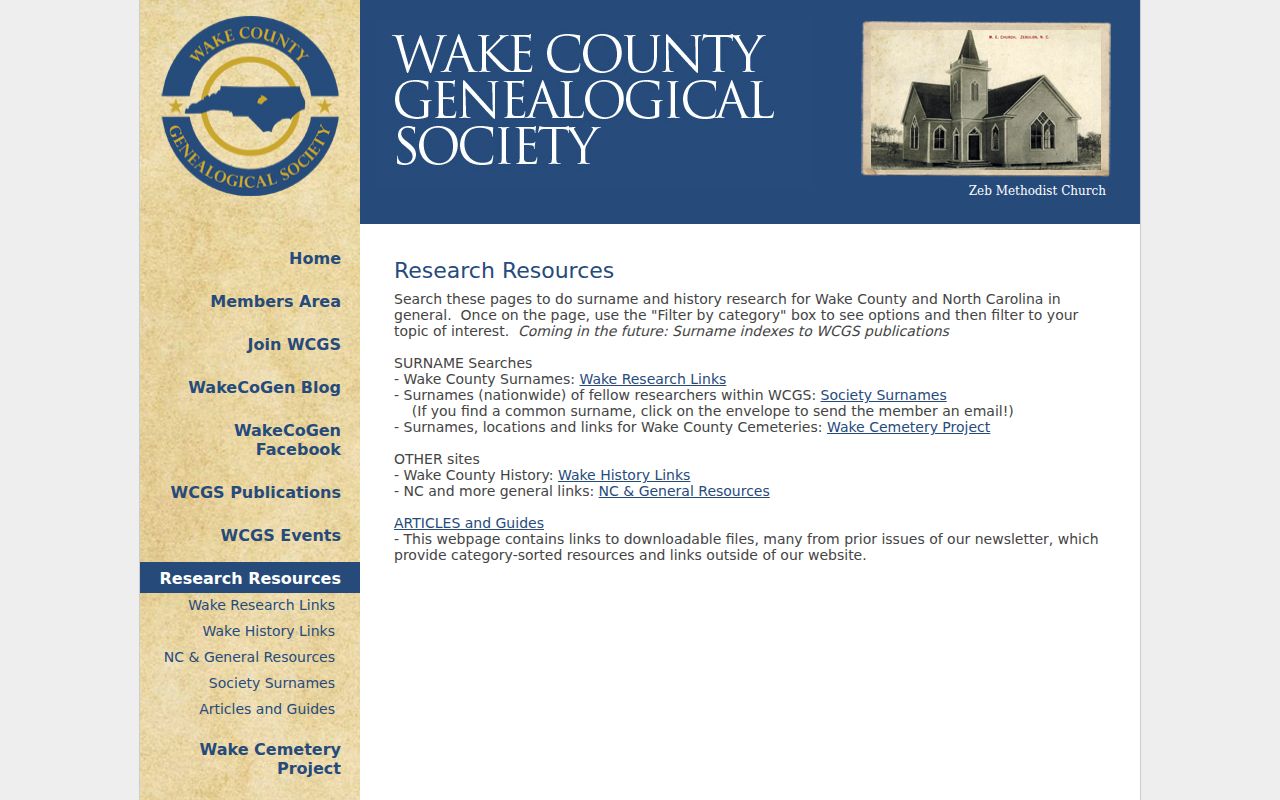
That Wake County resource points toward local-history materials that can test a directory lead without treating any one collection as complete.
Digital Wake County Directory Scans
DigitalNC offers a second route when a Wake County volume is not close at hand. Its City Directories collection can be browsed or searched by City, County, and Year, and it describes a large statewide body of material extending from an 1865 Wilmington directory into late-1960s issues. For Raleigh, the collection provides direct leads to a Hill’s 1925 scan and a Hill’s 1933 scan. Those scans are especially useful for checking spelling, layout, and abbreviations that a text search may not capture.
Search a surname in both the alphabetic and street portions when an edition contains both. The scan is the item to preserve, not a bare search-result snippet. The DigitalNC City Directories collection provides the city, county, and year controls, while the 1925 Hill’s Raleigh scan and 1933 Hill’s Raleigh scan provide image-based checks.
A named entry in a Wake County scan should be described as a historical listing at an address in that edition. It does not establish an unbroken connection to that address before or after the printed year.
Reading a Wake County Directory Entry
A Wake County entry may carry more than a name and street number, but its parts need to stay in their printed context. Directories can include a name, address, spouse or household notation, occupation or employer, telephone, and a street section. Conventions change by publisher and year. Record the edition title page and abbreviation key before expanding a short mark into a claim about a household.
| Name | Exact spelling, initials, honorific, and any household notation printed with the entry. |
|---|---|
| Address | Street number and street name, checked against the street section where present. |
| Occupation line | Printed work or organization text, retained as a historical notation rather than a present fact. |
| Household mark | An h or r mark, if used in that edition, copied with the volume’s key. |
| Page evidence | Publisher, edition year, printed page, and scan or shelf source kept with the note. |
- Criss-cross directory
- A street-ordered section that can place listed names under an address rather than under the alphabetic surname.
- Householder index
- An arrangement that emphasizes a household or address and should be read using that volume’s own instructions.
- Abbreviation key
- The publisher’s explanation of short marks, usually near the front of a volume, that should be photographed before interpretation.
Do not turn a short notation into more than it says. “Widow,” boarding, rooming, or an occupation phrase may be a publisher convention. Copy the term, cite the page, and look for a second dated source before making a broader family-history conclusion.
Wake County Directory Milestones
The Raleigh preservation record gives several practical checkpoints for an address trail. They are clues tied to identified editions, not a promise that every Wake County directory used the same format. Paired with a dated deed, plat, or map, they can help decide what an address search can actually show.
- 1900: the Raleigh directory is identified as the first edition with streets and houses listed.
- 1914: a directory edition was paired with Sanborn material in the historic-preservation report.
- 1925: a Raleigh edition is documented and has a DigitalNC scan lead.
- 1933: another Hill’s Raleigh scan provides a second image-based comparison point.
- 1938: the report identifies the first year owner occupancy was noted.
These dates support a Wake County address sequence: test the 1900 street-and-house listing, compare the 1914 building context, then read the 1925, 1933, and 1938 editions for change. The result is a dated chain of evidence, not a claim of continuous occupancy.
Wake County Records Beyond the Directory
Raleigh is Wake County’s county seat and has the deepest municipal reference trail, but Raleigh sources do not cover every address in the county. A Raleigh staff listing can help route a question to a city department. The directory itself is not a residential-person source. For a Wake County address outside Raleigh, use the relevant municipality and county custodian rather than treating a postal place name as city jurisdiction.
Raleigh’s staff and department directory is a routing source when a historical entry points to a city-held record.
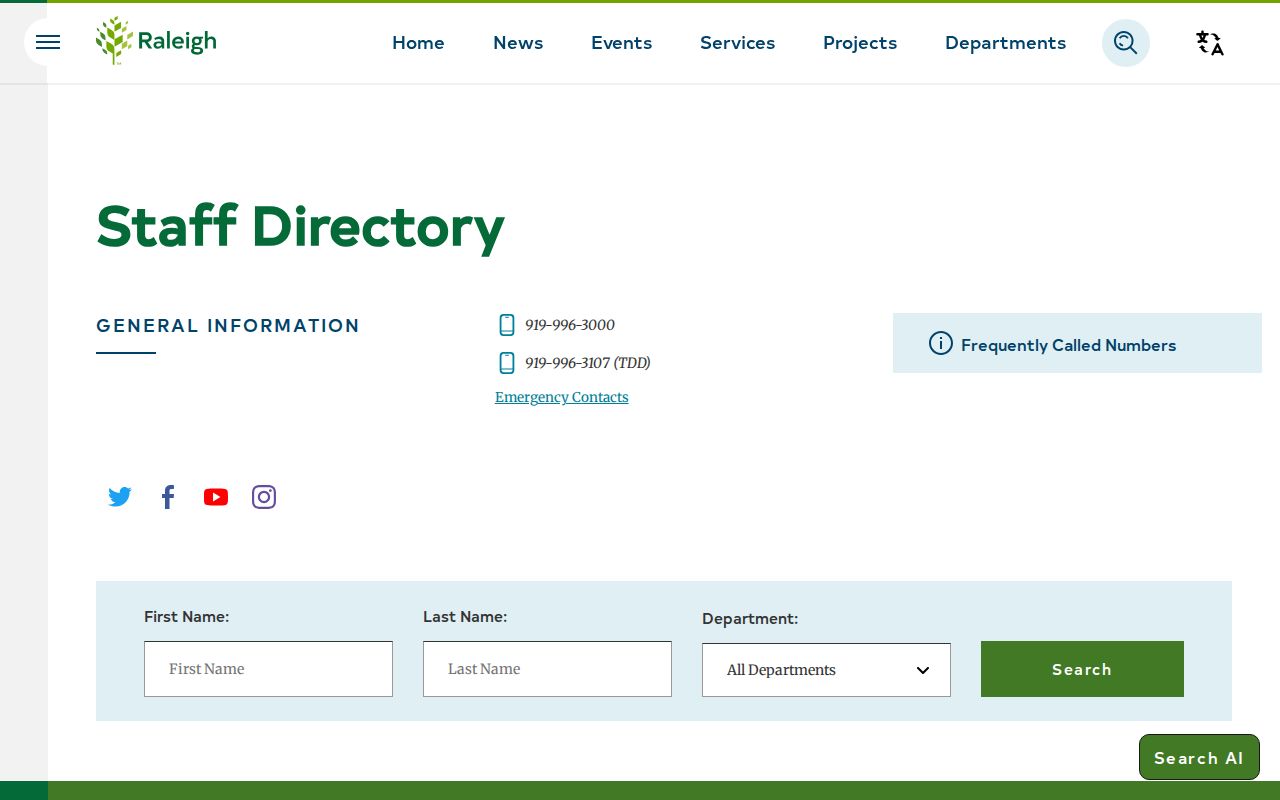
The public Raleigh directory helps identify the office that can answer a city-record question without being mistaken for a resident roll.
For existing city material, the Raleigh public-records route asks for a department, record description, date range, address, case number, or other identifier, plus a preferred format. Requests are handled in received order, and the city may redact material or decline to create a new compilation. That route fits planning, services, council, board, and other city-held records, while recorded instruments remain with the Wake County Register of Deeds.
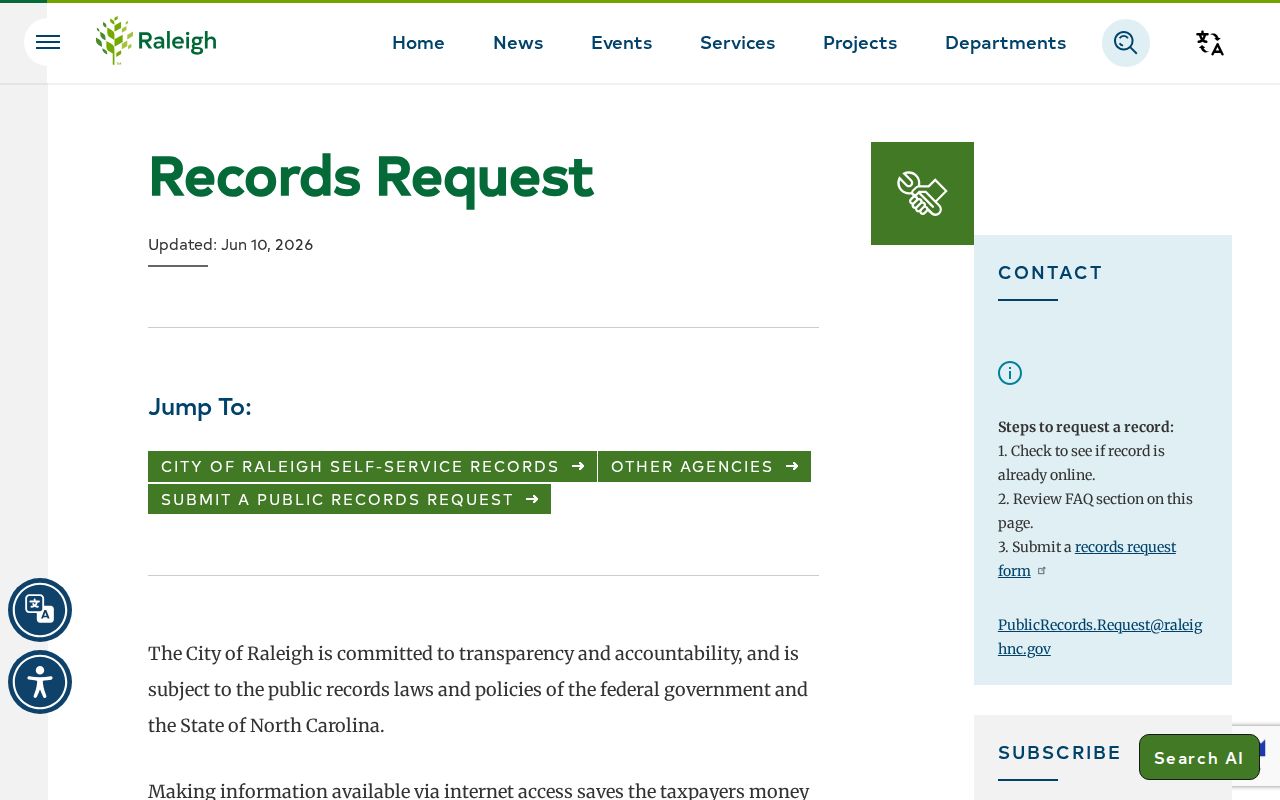
A focused request with an address and date range is more useful than a broad request for a list of names.
Development cases can add an applicant, owner, agent, map, subdivision, permit, inspection, or code-record lead for a particular date. Those roles are civic or property-development facts, not proof that a person lived at the address. Raleigh Development Records provides the city portal and a records contact route.
The city-development route can corroborate an address timeline when its case date and role are kept distinct from a directory listing.
Note: A postal Raleigh label can fall outside the present city limit, so check the relevant municipal and county custodian before requesting city records.
Trace a Wake County City Directory Household
Start with the earliest confirmed Wake County entry, then move one available edition at a time. The point is to notice a move, spelling change, new household notation, or disappearance without filling the gap by guesswork. When the research turns to current address-keyed sources, the Wake County streets resource handles that modern record chain separately.
- Find the surname, given name, or address in a confirmed edition and record the publisher, year, page, and exact wording.
- Check the closest earlier and later editions, including the Suburban record when the address is beyond the core.
- Read the street or criss-cross portion when it exists, then compare nearby names only as address context.
- Pair a directory year with the nearest federal census release and keep the two sources as separate dated records.
- Use a deed, plat, newspaper notice, cemetery record, or probate file to test a transition suggested by the listings.
Newspapers add public notices, marriages, obituaries, advertisements, land transactions, and civic activity, though their Wake County runs are incomplete and namesakes are common. The Wake library papers collection is a finding-aid lead through Olivia Raney, not a searchable resident file. A good note says what each record actually reports and leaves uncertain links open for later checking.
Wake County Directory Evidence and Limits
Directories are snapshots. They are not census returns, recorded deeds, voter registrations, or proof of current occupancy. The strongest Wake County comparison joins a dated entry to the street number, parcel, and period. For built-environment context, the Library of Congress holds Raleigh Sanborn material from 1884 through 1950, including a 1914–1950 item with 83 sheets. The maps show buildings, uses, materials, and street context, but they do not name every person associated with a property.
Raleigh Sanborn map material at the Library of Congress can test whether a building and street context fit a directory date. DigitalNC’s Wake newspaper holdings add another cross-check for public events, but incomplete runs and namesakes remain real limits. Preserve a scan, page, publisher, and source link for each claim, then state it as a dated historical listing rather than a complete account of a household.