
Finding Wake County Residents
Wake County does not publish one authoritative list of everyone at every address. The better route depends on the record question. An address can lead to a parcel, its Real Estate ID or PIN, a recorded instrument, and then a dated historical listing. A name can be tested in a voter result, a court party search, an old directory, or a public filing. Each result describes a role at a point in time. Keep owner, recorded party, voter status, and historical listing separate instead of calling them all proof of present residence.
Use the smallest relevant record trail. That preserves context and reduces mistakes with common names.
- For an address, search the county property record and save the situs address, REID, and PIN.
- Open the parcel in iMAPS and compare its jurisdiction, ZIP Code, subdivision, and boundary layers.
- Use the owner or instrument reference to search the Register of Deeds index, then read the dated image.
- For a historical household, check the library catalog and a scanned Raleigh directory by year and page.
- When a record is not online, ask the custodian for an existing file using its identifier, date range, and copy type.
Wake County Resident Records Offices
Three Wake offices form the first stop for most residents-directory questions. The assessor bridges an address to a parcel. The Register of Deeds indexes recorded instruments and county vital copies. Elections administration handles registration questions, while the state search displays the public lookup result. Court files are instead held through the Wake Clerk and the statewide Judicial Branch. For a full address-first path, use the Wake County street records route.
Wake Register of Deeds
Wake Justice Center
300 S Salisbury St, Suite 1700
Raleigh, NC 27601
Recorded documents: 919-856-5476
Wake Real Estate Search
County assessment and parcel records
Tax help: 919-856-5400
Wake Board of Elections
1200 N New Hope Rd
Raleigh, NC 27610
voter@wakegov.com
Wake County Property Search Fields
The Wake County residents directory often begins with a parcel because the Real Estate Search accepts several different starting points. An individual owner route uses last name with optional first and middle names. Address search separates street number from street name and tells users to leave off the street type. REID is a text identifier. PIN search uses map/scale, block, and lot, with scale outside the ten-digit PIN. A result should be read as a public tax-card record, not an occupancy statement.
| Wake search route | Useful input | What to preserve |
|---|---|---|
| Owner | Last name, first or middle name, business owner | Displayed owner role and result date |
| Location address | Street number and street name without type | Situs address, REID, PIN |
| REID | Real Estate ID | Parcel detail cross-reference |
| PIN | Map/scale, block, lot | Parcel and legal-description context |
Note: The assessor says information changes as public records are filed and is supplied without warranty, so record the access date with any result.
See the live Wake County Real Estate Search before entering an address. Its screen shows the separate routes rather than one broad person search.
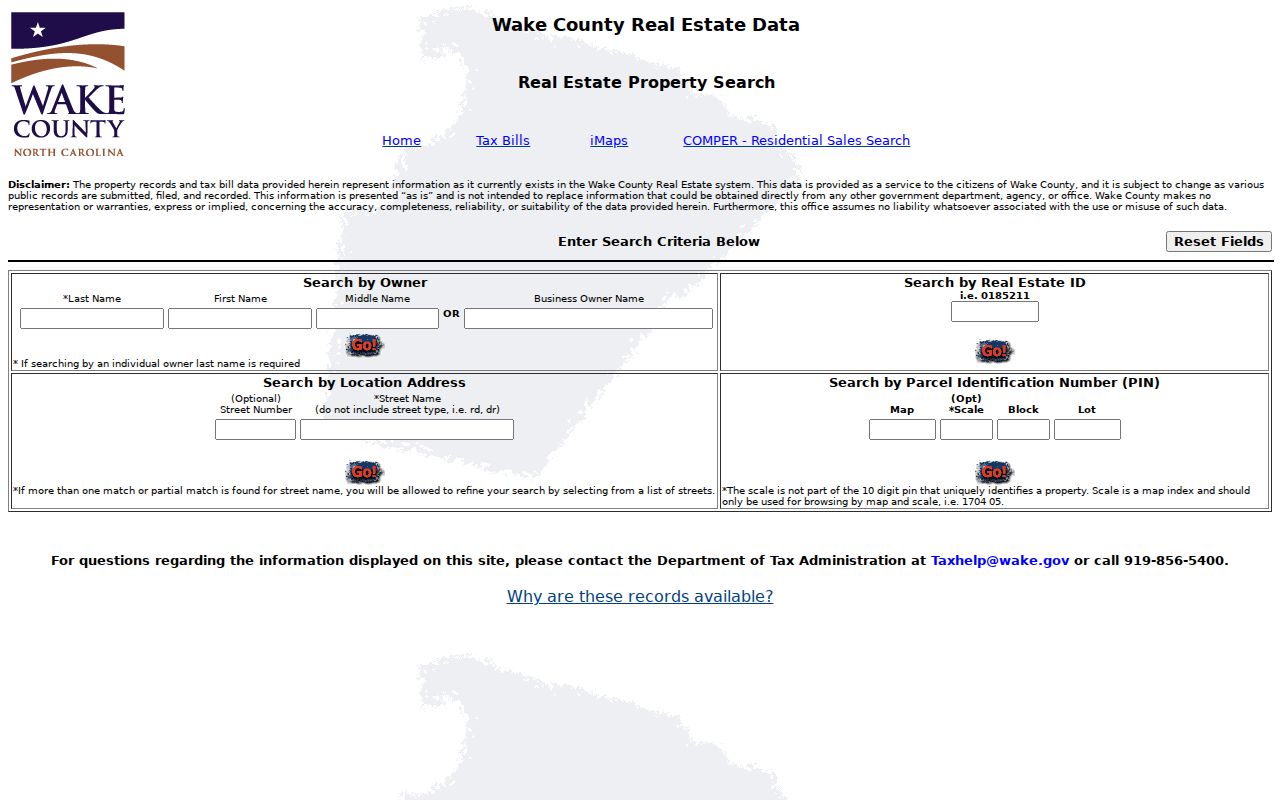
The portal connects an address to a public parcel record. Its owner and mailing fields require careful date and role labels.
Wake County Parcels in iMAPS
Raleigh/Wake iMAPS adds the geography missing from a tax-card result. Its layers include property boundaries, addresses, deeds, permits, subdivisions, ZIP Codes, corporate limits, planning jurisdictions, precincts, districts, zoning, flood features, parks, and service layers. A Raleigh mailing label may sit outside the current corporate limit, and a ZIP is not a municipal boundary. Turn on the layers that answer the question, then save the parcel identifier before moving on.
The relationship is practical: address to assessor, assessor identifier to parcel, parcel to a dated deed or permit. The map is excellent for spatial context but it is not a survey or an occupancy list.
Open Raleigh/Wake iMAPS to inspect the live layers and their differing update dates.
Read North Carolina Public Records Act language before asking a custodian for a record.
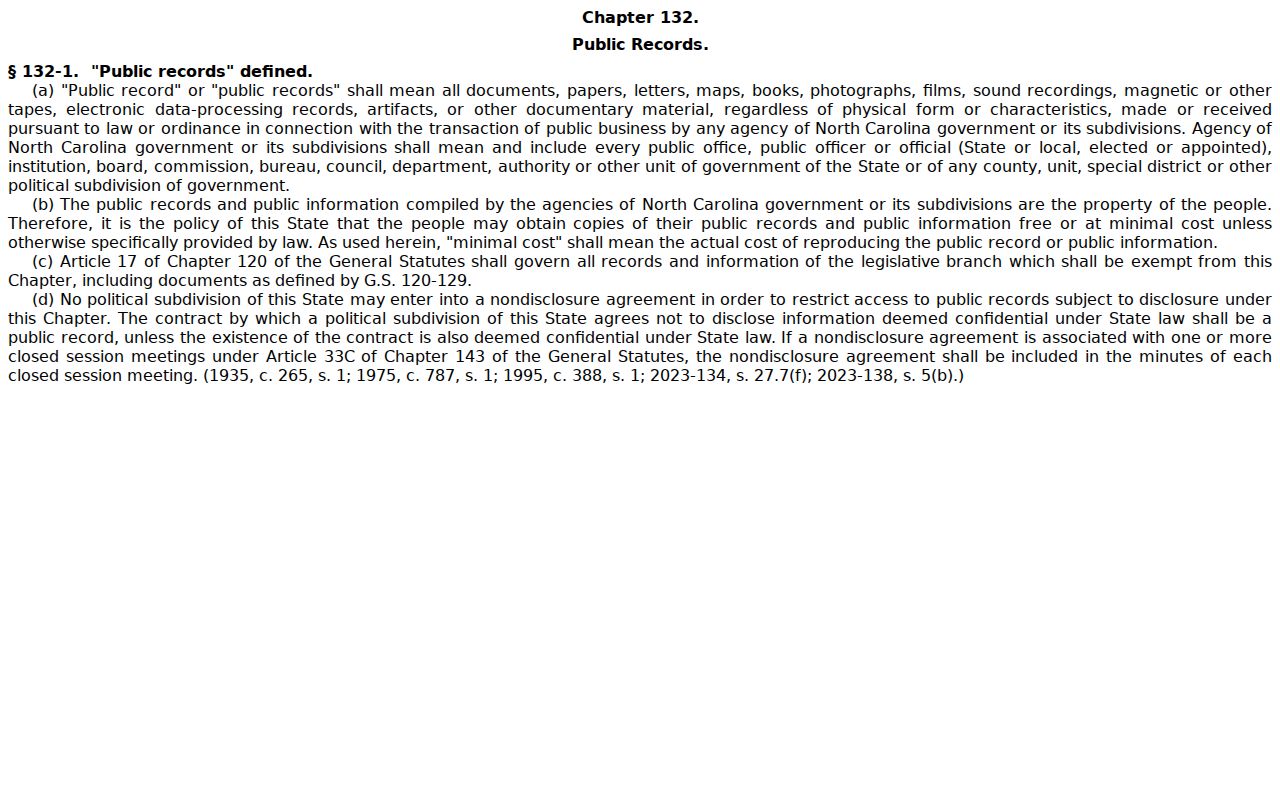
North Carolina public-record access reaches existing records held by a custodian. It does not require staff to compile a new all-resident list.
Wake County Recorded Party Trail
The Register of Deeds CRPI is the county’s recorded-instrument route. Its standard search can use grantor or grantee, document type, date range, book and page, maps, and a Sounds Like option. A useful first pass starts with fewer characters and then narrows by date or document type. The form distinguishes individual and firm parties, an important point where a company owns the parcel. A book and page result is a lead, so open the image and read the dates, parties, legal description, prior references, and any restrictions or easements.
The CRPI transition notice directs researchers to the old application for documents from July 1785 through April 17, 2025, while the newer land-record application is the current route. The index itself is a card catalog and may require spelling variants. A plain or certified copy can also be requested from the Register of Deeds by mail with document details, book/page, and the desired copy type.
- Parcel
- A defined piece of land linked to assessor identifiers and map geometry.
- Grantor and grantee
- The parties giving and receiving an interest in a recorded instrument.
- Index
- A finding aid that points to a record, not a replacement for its image.
- Criss-cross directory
- A historical directory arranged by address rather than by surname.
Note: A deed identifies parties to an instrument at its recorded date, not an undated claim that a named person now occupies the property.
Wake County Court Records Carefully
A name hit in a court system needs especially close reading. The NC eCourts Portal can search by Wake location or all locations, hearing type, case number, party, business, attorney, judicial officer, courtroom, and date range. A public result can display a case number, county, case type, filing date, parties, status, register-of-action events, hearings, judgments or orders, and available documents. Victim information, sealed material, expunged material, and other confidential fields are limited or absent.
The public Portal is not the official court record. When the exact document or certified copy matters, use the case number and contact the Wake County Clerk of Superior Court at the Wake Courthouse. A proper request identifies the division, record, date, delivery format, and certification need. The clerk also handles probate and divorce files; marriage records route to the Register of Deeds.
The Wake County Courts page provides the local court and clerk route.
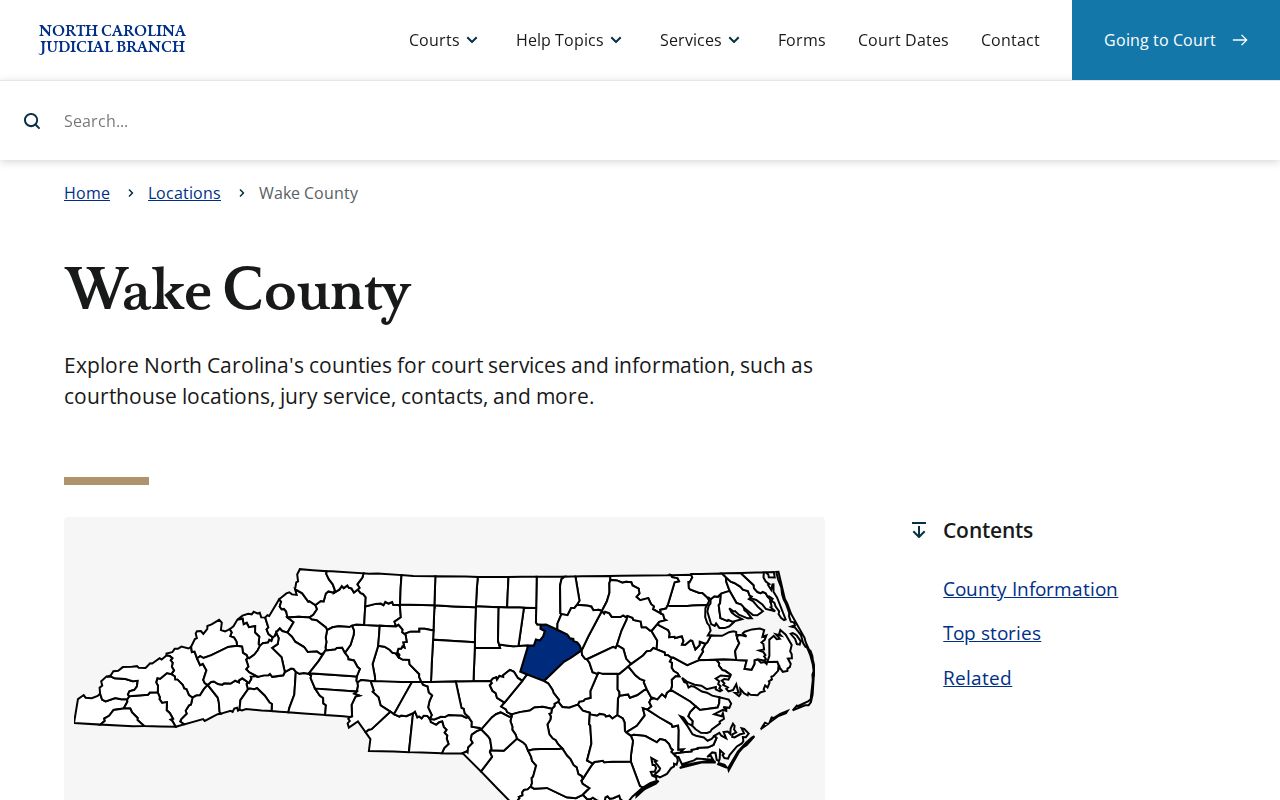
Use the courthouse route for file inspection and an official copy when the online display is not enough.
The statewide North Carolina eCourts information page explains the public system and its separate filing services.
Use a court result as a dated case reference. A party name alone does not describe a person’s present status or address.
Wake County Voter Record Limits
The North Carolina voter lookup requires first name, last name, and at least one status choice, with optional middle initial, birth year, and county. A public result can show status, jurisdictions, precinct, polling place, sample ballot where available, absentee information, and voter history. The county filter helps with namesakes, but the form is not a ZIP search and does not expose full date of birth or a general address export.
N.C.G.S. 163-82.10 makes specified registration information public while protecting full or partial Social Security numbers, full date of birth, email, driver-license information, photo-ID copies, and related fields. “Registered” reports a status at search time. It does not establish current physical presence or resolve a same-name match by itself.
Visit the NC State Board of Elections Voter Search with a county and identity cross-check ready.
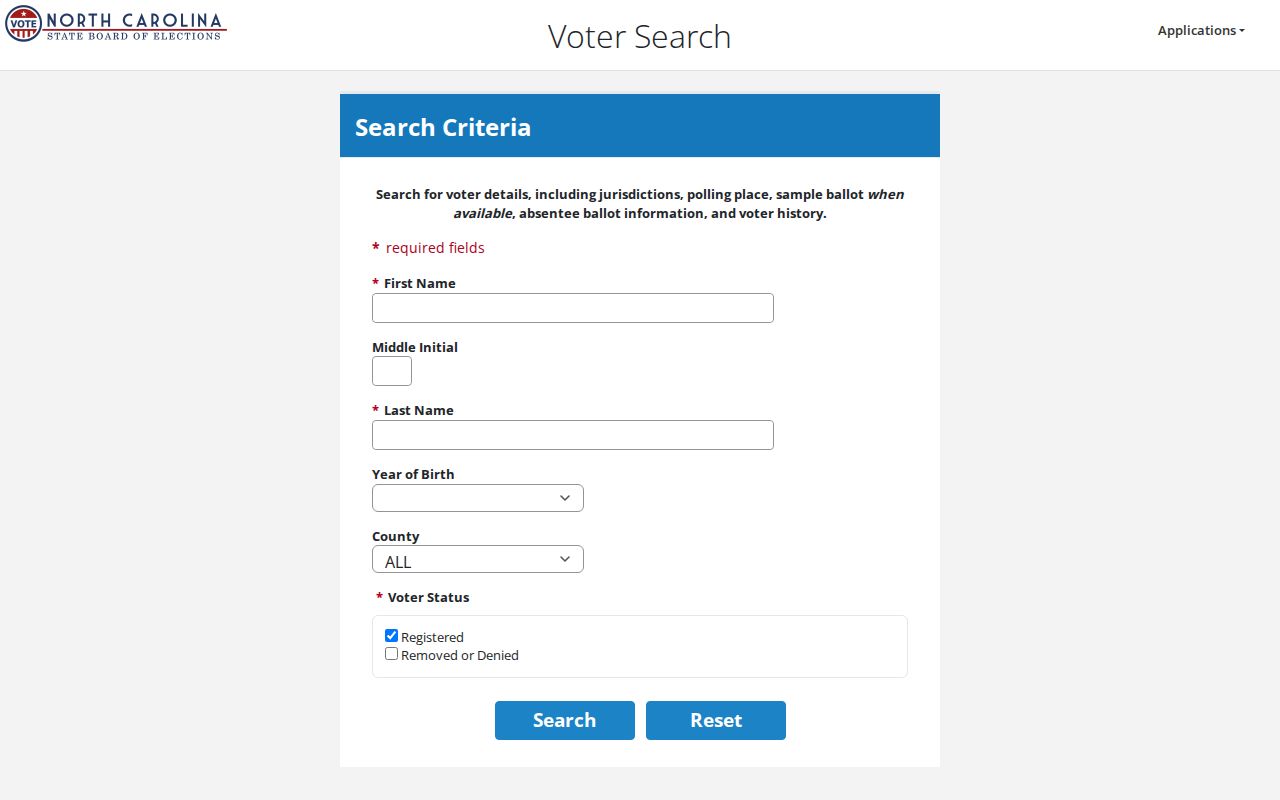
The official form keeps its public and protected fields separate. Save the result date and precinct rather than republishing a full voter row.
The voter-record access statute is the authority for the public-versus-confidential distinction.
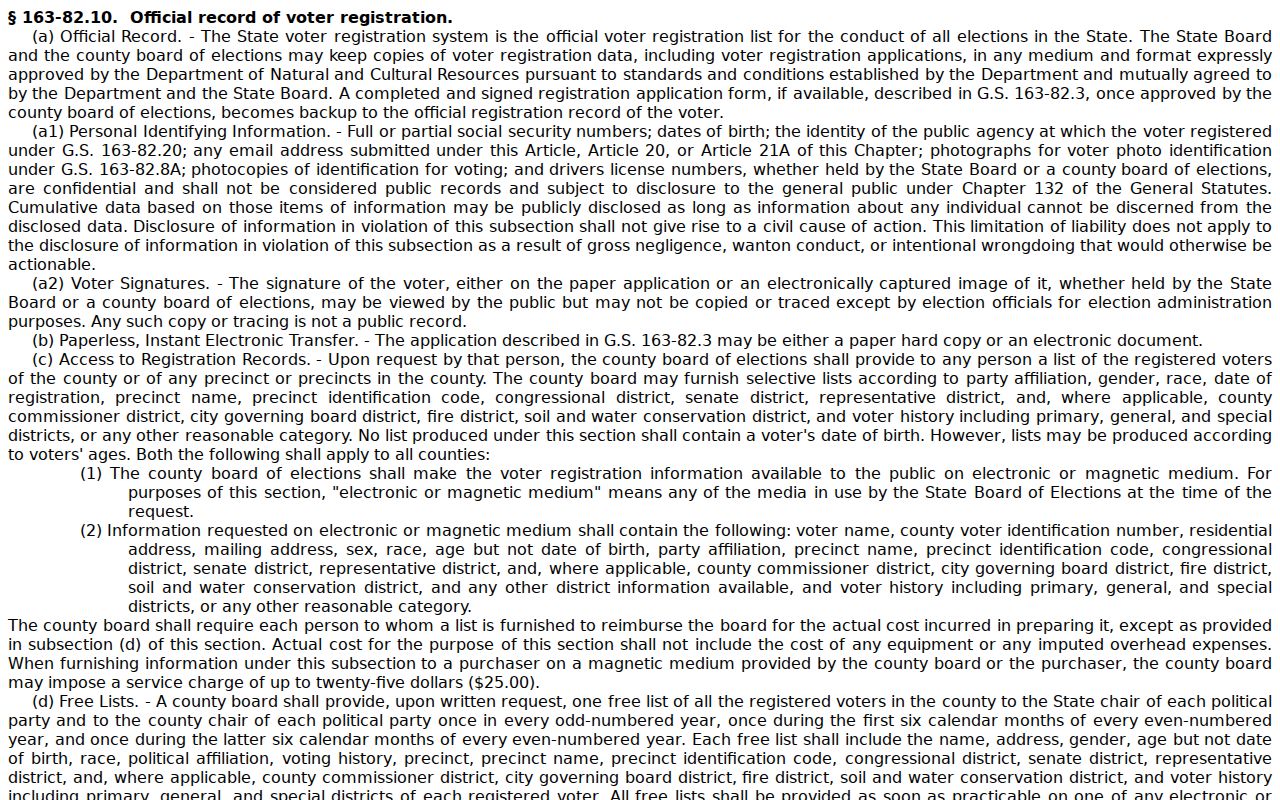
The statutory text matters when a requested field is not present in the public result.
Current Wake County Resident Directories
Current directory-like sources answer different questions. The assessor shows a public property and owner record. CRPI identifies parties to recorded instruments. Voter Search reports a public registration result. eCourts reports public case data. The Raleigh Neighborhood Registry maps civic groups, not households. Those distinctions keep a Wake County residents directory search useful without converting separate public records into a single profile.
| Wake source | Record role | Custodian | Access route |
|---|---|---|---|
| Real Estate Search | Parcel owner and tax-card fields | Wake County | Free web search |
| CRPI | Recorded grantor, grantee, and instrument | Register of Deeds | Index, image, or copy request |
| Voter Search | Public registration status and geography | NC State Board of Elections | Free lookup and request route |
| eCourts | Public case-party data | NC Judicial Branch | Portal, clerk counter, or copy request |
| Neighborhood Registry | Registered group and civic boundary | City of Raleigh | Public map and group directory |
A one-person question benefits from a source-by-source verification sequence rather than a broad list. The Wake County resident lookup page follows that sequence.
Wake County Vital Record Routes
Vital records answer event and relationship questions, not a current-address question. Wake County offers online certificate requests for Wake events and a paper route through the Register of Deeds. The county form asks for the event, person and date/place details, relationship, applicant contact, identity documentation, quantity, signature, and payment. Certified copies have eligibility limits under N.C.G.S. 130A-93. A qualifying relationship or authorization remains necessary even when an index entry exists.
NC Vital Records has separate statewide ordering and research guidance. It lists practical availability from 1913 for births, 1930 for deaths, 1962 for marriages, and 1958 for divorces, with different custodians and access rules. For older work, the Register, State Archives, State Library, local newspapers, and cemetery resources may be better leads. Divorce copies come from the Clerk of Superior Court in the county where filed.
Check the current requirements at NC Vital Records before beginning an order.
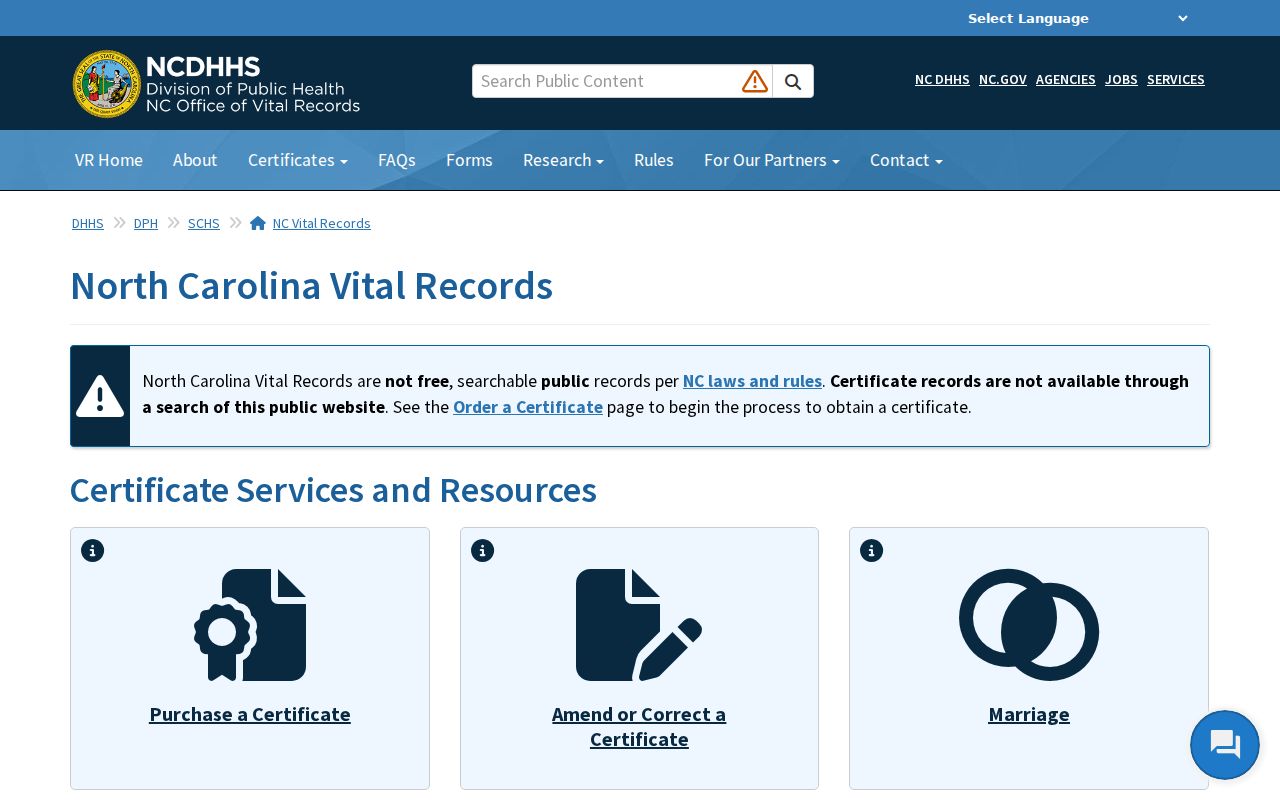
The state route is useful for current order and research guidance, while Wake’s Register is the county event route.
Historical Wake County Resident Directories
Wake’s historical shelf is strongest in Raleigh. The Wake Public Libraries catalog places Raleigh City Directory volumes by R.L. Polk & Company and Hill Directory Company in Olivia Raney Local History. The collection is noncirculating and its early run is intermittent, including 1880–81, 1887, 1891, 1896–97, 1899–1900, and many later volumes. The Raleigh Suburban Directory is a separate collection, with listed runs that include 1969–1977 and 2021. Check the catalog for the needed edition rather than assuming every year survives.
DigitalNC adds searchable and browsable scans by city, county, and year, including direct Raleigh 1925 and 1933 leads. A directory entry can carry a name, address, household notation, occupation, telephone, or street-section listing. It is a dated listing. Pair it with the title page, abbreviation key, page image, prior and later editions, a deed or plat, and a Sanborn sheet before drawing an address-history conclusion.
The fuller collection and year-by-year method are on the Wake County city directories page.
Wake County Records Request Path
When the online search ends, ask the office that keeps the record for an existing document, not a new personal dossier. The North Carolina Public Records Act, N.C.G.S. Chapter 132, generally supports prompt access to existing public records, subject to confidentiality and redaction rules. A focused request names the custodian, record type, date range, parcel or case identifier, and desired copy format. It also leaves room for the answer that the record is not held by that office.
Wake recorded-document requests can specify document type, book/page or grantor/grantee/date details, copy type, quantity, contact and mailing information. The form lists a one-business-day processing statement and provides a mail channel to the Register of Deeds. Raleigh city-held planning or service records use the city’s public-records route, which asks for a department, description, date range or identifier, and delivery preference. Court copies go through the Wake Clerk.
Note: A clear record request saves time because Wake County, the City of Raleigh, the Clerk, and the Register of Deeds hold different material.
Wake County Deed Index Codes
Wake’s recorded-document tools have a few local search details that can save time. CRPI offers document type, Grantor Type and Grantee Type, date, book, page, map, and advanced methods. A name entry needs at least three characters, while a book number needs four and a page needs one. For map books, the form uses BM with a four-digit year. Condominium maps use CM with a four-digit year. Those codes are search instructions, not part of a street address.
Try the normal spelling before a Sounds Like search, then use fewer characters or a date range when an index spelling is uncertain. When the property is known, the assessor’s REID or PIN can help connect the parcel to the right instrument. Read the full image before treating a search result as evidence. The image may show a legal description, prior reference, map or lot context, and the date at which the parties were recorded.
Wake County Public Result Context
Official records and commercial people-finding products solve different problems. An official portal identifies its custodian, field labels, access date, and documented limits. A commercial listing may mix dates and roles without showing how it matched them. For a Wake County residents directory search, the more reliable practice is to read the underlying assessor card, deed image, court docket, voter result, or directory scan in its original context and compare a second source only when the question needs it.
| Official source | Useful strength | Limit to keep visible |
|---|---|---|
| Assessor and iMAPS | Address-to-parcel bridge | Owner or mailing field is not occupancy proof |
| CRPI image | Dated recorded instrument | Index entry alone is only a finding aid |
| eCourts | Public case summary and events | Portal data is not the official court record |
| Historical directory | Year-specific name and address listing | Does not establish continuous residence |
Wake County’s scale makes the discipline useful. A name-only search can be noisy across Raleigh, the other municipalities, and unincorporated areas. A parcel, middle initial, record date, or case number makes the result easier to interpret.